
Story
FELDER'S CREATIVE GARDENING
Success in the garden is usually a matter of perception, which can be overcome with confidence. Unfortunately, indecision over how to get started, frustration by past failure, or the fear of criticism holds a lot of...
Success in the garden is usually a matter of perception, which can be overcome with confidence. Unfortunately, indecision over how to get started, frustration by past failure, or the fear of criticism holds a lot of gardeners back from being creative.
This is why over the years I have adapted simple recipes which can help anyone, even children, at least get started in the right direction.
Got bad dirt? It's like adding crumbled crackers to a bowl of chili - dig the native dirt a shovel deep and fluff it up with a little bark, compost, or leaves, or combinations. Confused by the intricacies of composting? Just think "leaf pile" and find a spot to leaves, dead leafy plants, weeds, kitchen scraps, and other biodegradable debris; it's slow but works. Everything else is finesse.
Getting started with garden design can be hard to imagine, but one of the easiest tricks for making that first step for an attractive, all-season backyard garden scene, which I learned decades ago from Nel Hayward (founder of Mynelle's Garden in Jackson), is to look out your window or from your patio to the farthest spot in your garden, and make it an attention-grabbing focal point.
No matter how large or small, start with a bold "hard" accent such as a statue, vine or swing arbor, birdbath, large urn, seating, outdoor fireplace, colorful gazing ball, water garden, whatever.
Highlight it with a small flowering tree or large flowering shrub, then make a path to it, straight or curved, paved, flagstone, or mulch.
Then (and this is where it gets fun but takes time) simply start adding more plants, at your own speed, beside the focal accent, and on one side or the other of the path. Start with groups of low-growing shrubs, then liriope, iris, or other smallish foliage perennials and seasonal flowering annuals, all connected with mulch. Once you find an interesting combination, simply repeat it along the walk.
Important thing is to start with the characterful focal feature with one showy plant by it, and the path. It will work instantly, and taking your time to fill in between is lagniappe.
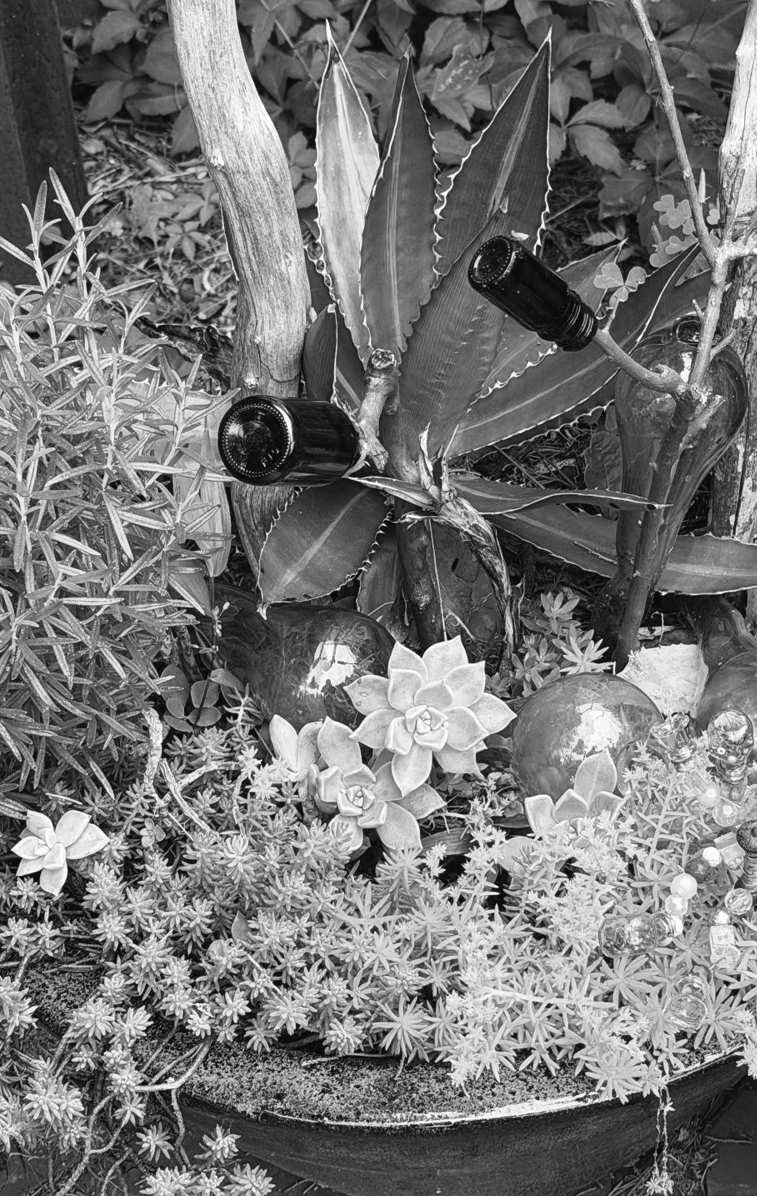
My other recipe was learned from MSU professor Ralph Null, who taught both floral and landscape design. Forget the Hogarth curve and all the other artsy twists; stick with what florists call "line, mass, and filler." It's the old "thriller, filler, and spiller" approach, which I refined as something round, something spikey, and fill in with smaller frilly bits.
To get an idea, make a fist and point two or three fingers up. Or imagine a bowling ball backlit with a handful of small crape myrtle branches. Adding anything else in between makes it more interesting.
This can be done with cut flowers, like a roundish zinnia and spikey salvia, and a bit of fern. It can be done with flowers in a border, like combining daylilies with iris foliage and liatris. It is very effective in small herb, flower, or succulent container gardens. Shrubs can be mixed and matched for shape and colorful foliage. On an even larger scale, try a frilly crape myrtle or vitex towering bald cypress or cedar tree, all skirted with round boxwoods or other pruned plants and ferny nandina. And again, any of these main shapes can be created using non-plant items.
So, my basic design recipe is "spikey, roundy, and frilly" and maybe something floppy like cascading ivy. Add a whimsical hard feature, even in small pots (little bottles on sticks, anyone?) and you got yourself an artistic scene as good as anything done by a professional.