
Story
FELDER'S WEED WAR
Did a little "tarp therapy" the other day, piling weeds atop a heavy-duty sheet to drag to my long, narrow, wildlife-friendly dead hedge. In the process I nearly got swallowed alive, looking something similar to a dog...
Did a little "tarp therapy" the other day, piling weeds atop a heavy-duty sheet to drag to my long, narrow, wildlife-friendly dead hedge. In the process I nearly got swallowed alive, looking something similar to a dog emerging from inside a big leaf pile.
Taking advantage of a cool snap, I dove headfirst into a corner that has been choked for years with Asiatic jasmine. The running evergreen vine, formerly one of my favorite ground covers until I found firsthand what a thug it can be, was choking out shrubs and clambering over the fence. It also welcomed native Virginia creeper, thorny smilax (sometimes called the devil's spawn) and seedlings of both cherry laurel and oaks from my neighbor's acorn tree.
Before going further, let me assure you that though I try to be mostly organic, I am very familiar with and not opposed to using herbicides. If used correctly some are quite useful without harming me or my garden; most of the relatively rare problems come from extreme instances where folks have gone overboard over a long time. And truth is, a lot of home remedies, including salt, are more problematic to my garden and potentially toxic to people and pets.
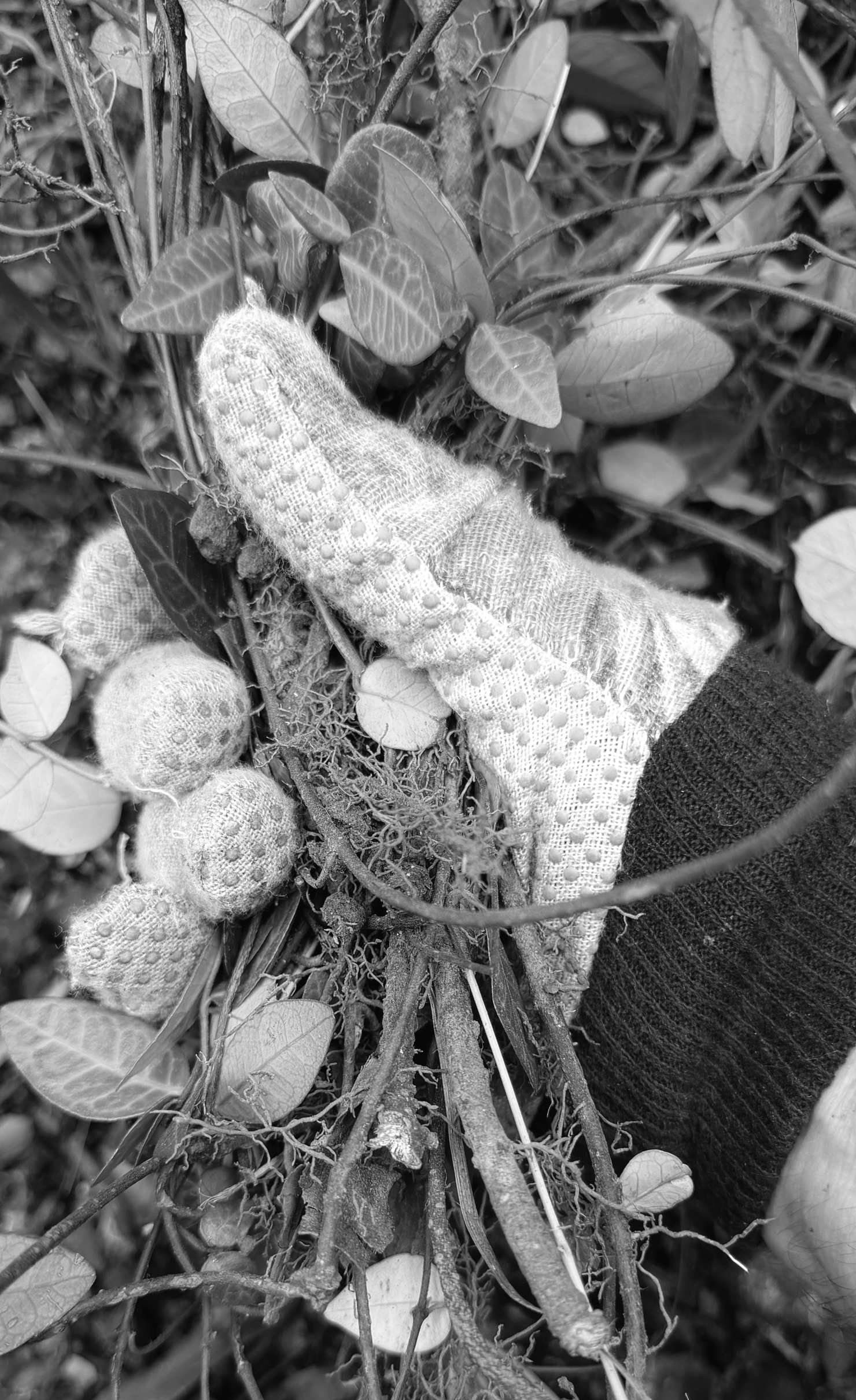
So, instead of reaching for my preferred and trusted glyphosate, I hand-pulled to the point where my cotton gloves had holes worn in three of the fingertips. Believe me, if there was anything easier, I would know about it and do it myself.
On my knees and, wary of spiders, snakes, and guinea wasp nests, I inched into the fray, tugging out handfuls of vines and seedlings at a time, trying to get roots and all. Some runners had shot over eight feet, rooting all along the way, and some tree seedlings turned out to be shoots off short stumps I had clipped a year ago making them nearly impossible to pry up.
But I did it, and after a couple of days' recuperation I dug the area, sifting out missed bits that can easily re-root. Over the next few months, I will keep an eye out for any little individuals that pop up, which will quickly get pulled before they have a chance to get rooted and start spreading on their own.
I went back to cover the worked-up soil with a couple inches of bark mulch which was easy to spread and is not deep enough to support termites. I know lots of folks prefer pine straw, but it takes a lot more to spread and takes forever, if ever, to break down and feed the soil.
And I know from decades of observation that alluring weed barrier fabrics, enticing as they seem, bring serious adverse effects down the road. First, they starve the soil by preventing worms from getting up to the surface to eat fallen leaves and other mulch, which they carry deep around plant roots and keep soil loose and healthy. And sooner or later weeds either come through or get rooted in the fabric. Only time I ever use it is under chipped slate walks.
Though I do occasionally resort to glyphosate herbicide (no longer available in Roundup, which I no longer recommend), especially on poison ivy and privet hedges, my bottom line, which this old gardener hates to admit, is that the best approach to weeds in shrubbery is pull, pile elsewhere, and mulch. Not easy, but it works well.
Oh, and I hope I wasn't misleading about not using chemicals; truth is, after taking a warm shower, I ended up taking a dose of ibuprofen for my aching arms and shoulders.