Story
“Roadhouse Justice” Trent Brown's New Book Gives Glimpse into the Career of Charles B. Gordon
My father, Charles B. Gordon, died 40-years ago this month, closing out a newspaper reporting career spanning six decades. That calling led him from primitive teenage correspondent for the weekly newspaper of his...
My father, Charles B. Gordon, died 40-years ago this month, closing out a newspaper reporting career spanning six decades.
That calling led him from primitive teenage correspondent for the weekly newspaper of his birthplace, the Southern Herald of Liberty in rural Amite County; to many years of daily coverage of preternatural events for the McComb Enterprise-Journal; and a decade of covering and commenting on Mississippi politics for the Jackson newspapers before his death in 1982.
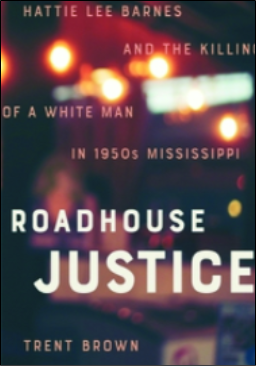
Trent Brown, a professor of American Studies at Missouri University of Science and Technology, has provided a glimpse of Dad’s career in his new book published by LSU Press, “Roadhouse Justice.” Brown is a graduate of Brookhaven High School, the University of Mississippi and the University of Chicago.
The book is subtitled, “Hattie Lee Barnes and The Killing of a White Man in 1950s Mississippi,” and offers “a true crime narrative that seems at once familiar and mystifying; an authentic and fascinating reveal of the strange interplay of race, class, and sex in the segregated South,” according to one back-cover note.
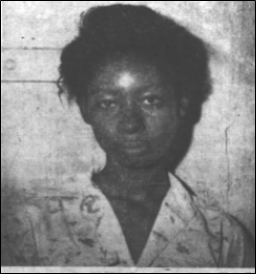
In early 1951, Barnes, a 21-year-old Black woman, shot and killed a white Tylertown man, Lamar Craft, who was 22, as he tried to enter her bedroom through a window at “Rob Lee’s Place,” a honky-tonk in far eastern Pike County near its intersection with Walthall County along U.S. 98. Barnes was a maid, caretaker and often barkeep at the joint.
There should be no doubt as to Craft’s intentions upon reading “Roadhouse.” As Brown wrote, “... it would have taken no great stretch … to conclude what any man might want with (Barnes) in the early-morning hours in a closed county-line beer joint.”
The murder set off a sequence of legal events that if, as fiction, could be written only by the likes of William Faulkner, Eudora Welty or John Grisham. Trent Brown is a historian and writer of documented facts.
My father’s reportage of the case began immediately after he was apprised of the shooting by law authorities and that Barnes had been charged with Craft’s murder. Dad was adept at seeing through events and soon enough realized this was a case of self-defense, not murder.
Black people being set free for killing a white person in the Mississippi of that era was an almost unheard of act, no matter the circumstances. However, his reporting and the work of Barnes’ appointed defense lawyer, Joe N. Pigott of McComb, brought out the true facts.
Barnes was later set free on directed verdict by the unlikeliest of judicial sources, Pike County Circuit Judge Tom P. Brady, a renowned segregationist and founder of the White Citizens Council.
There is not enough space allotted here for a full analysis of Charley Gordon’s reporting or Joe Pigott’s legal work (or legendary Tylertown attorney Breed Mounger’s maneuvers on behalf of the Craft family) on this case. Brown’s book adequately provides a chronological review.
It is Brown’s assertion that Dad – and Pigott, later a circuit judge for the district – “ … risked personal safety in a society that was increasingly becoming less tolerant of dissent, especially on matters of race.”
Brown labeled “Roadhouse” as a story about “the injustices done to Barnes because she was African-American … (and) white men who swam against the current of popular opinion to do what was right.”
The author concluded, however, that neither my father nor Pigott “would have described himself as a crusader … Both men seem to have been driven by a sense that a profound wrong was being done.” Fortunately for Hattie Lee Barnes, Judge Tom Brady agreed.